Futures and Options Basics: What F&O Means in the Stock Market
Futures and options are derivative contracts that get their value from an underlying asset. Learn the basics, uses, and risks before trading.
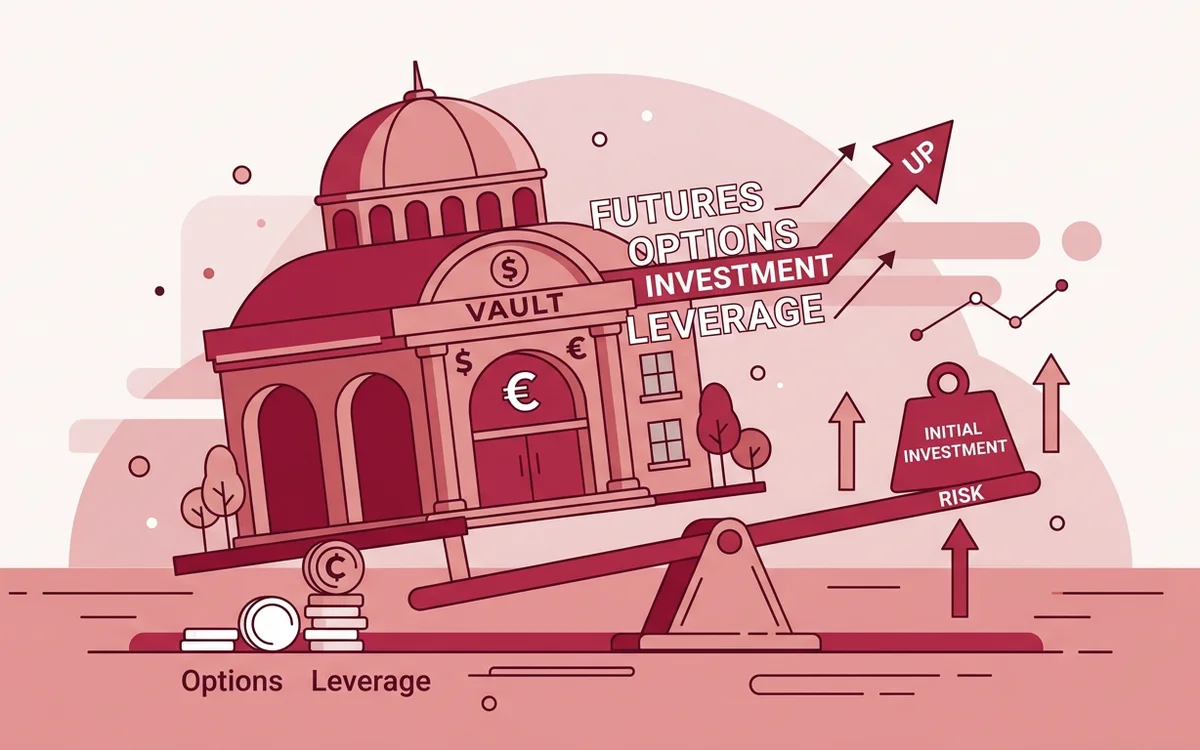
Futures and options, commonly called F&O, are derivative contracts. They can look exciting because a small amount of money can control a much larger position. That same leverage is also why losses can happen quickly.
What is a futures contract?
A futures contract is an agreement to buy or sell an underlying asset at a set price on a future date. In the stock market, most participants do not take physical delivery. They settle profits and losses based on price movement.
If you buy a Nifty futures contract, you gain when Nifty rises and lose when it falls. If you sell a futures contract, you gain when the price falls and lose when it rises.
Futures have linear payoff. Every point movement affects profit or loss in the same direction and proportion.
What is an options contract?
An option gives the buyer a right, but not an obligation. There are two basic types:
- Call option: Gives the buyer the right to buy the underlying at a strike price.
- Put option: Gives the buyer the right to sell the underlying at a strike price.
The option buyer pays a premium. The option seller receives that premium and takes on an obligation if the option is exercised or settled in the money.
Contract terms you must know
Before looking at any F&O strategy, understand the contract language:
| Term | Meaning |
|---|---|
| Underlying | The stock, index, currency, or commodity the contract is based on |
| Expiry | The date the contract ends |
| Strike price | The price level used in an option contract |
| Premium | The price paid by an option buyer and received by an option seller |
| Lot size | The number of units in one contract |
| Margin | Money or collateral required to hold certain F&O positions |
Most mistakes begin when traders look only at the premium and ignore lot size, expiry, and margin.
A simple payoff comparison
Suppose an index is at 20,000.
- If you buy futures, you gain as the index rises and lose as it falls.
- If you buy a call option, you need the index to rise enough before expiry to cover the premium.
- If you buy a put option, you need the index to fall enough before expiry to cover the premium.
- If you sell options, your profit is usually limited to premium, but loss can be much larger.
Futures are direct directional exposure. Options add time, volatility, and strike selection to the decision.
Why people use F&O
F&O can be used for:
- Hedging: Protecting an existing portfolio from adverse price movement.
- Speculation: Taking a view on price movement with leverage.
- Arbitrage: Attempting to profit from price differences across related instruments.
- Income strategies: Selling options to collect premium, with significant risk if not controlled.
For retail traders, speculation is the most common use, and it is also where risk is highest.
Why F&O is risky
F&O contracts have expiry dates. You cannot simply hold forever like a stock or mutual fund. They also use lot sizes and margin, so the actual exposure can be much larger than the cash you put in.
Option buyers can lose the full premium paid. Futures traders and option sellers can face losses that are much larger than the initial margin or premium received.
F&O is not a shortcut to building wealth. It is a leveraged trading tool. For most people, long-term investing and risk-managed asset allocation are more suitable than frequent derivatives trading.
A safer learning sequence
If you want to learn F&O, a sensible order is:
- Learn cash market basics first.
- Understand futures payoff before options.
- Learn calls and puts separately.
- Practice payoff diagrams on paper.
- Study margin, expiry, liquidity, and taxation.
- Simulate trades before risking money.
- Start only with money you can afford to lose, if you trade at all.
The goal is not to become overconfident. The goal is to understand where losses can come from.
Cash market investing vs F&O trading
Buying a stock or mutual fund unit is different from taking an F&O position. A stock can be held for years if the investment case remains valid. A mutual fund can be used for goal-based investing. F&O contracts expire, require active monitoring, and can create large losses quickly through leverage.
This does not mean the cash market is risk-free. Stocks and equity funds can fall sharply. But F&O adds extra layers: expiry, margin, lot size, volatility, and liquidity. That makes it a trading tool, not a beginner investing shortcut.
If your goal is wealth creation over decades, start with asset allocation. If your goal is learning markets, study F&O on paper before using real capital.
Common mistakes to avoid
- Trading because the premium looks small. A cheap option can still expire worthless.
- Ignoring lot size. One contract may represent a large underlying exposure.
- Selling options without understanding margin. Losses can expand quickly when markets move sharply.
- Holding positions into expiry without a plan. Expiry can change risk and liquidity.
Bottom line
F&O is a powerful market tool, but power cuts both ways. Before trading, understand the contract, payoff, margin, expiry, liquidity, and worst-case loss. Education should come before strategy.
Frequently asked questions
What does F&O mean?
F&O stands for futures and options. These are derivative contracts whose value comes from an underlying asset such as a stock, index, currency, or commodity.
Is F&O investing or trading?
F&O is usually trading or hedging, not long-term investing. Contracts expire, use leverage, and need active risk management.
Can beginners trade F&O safely?
Beginners should first learn payoffs, margin, liquidity, taxation, and downside risk. Paper trading and education should come before real money.
What is expiry in F&O?
Expiry is the date on which a futures or options contract ends. After expiry, the contract no longer exists and profit or loss is settled according to exchange rules.
What is lot size?
Lot size is the number of units represented by one F&O contract. It makes the actual exposure much larger than the visible option premium or margin.
Sources & further reading
Was this article helpful?