Buying vs Selling Options: Premium, Probability, and Risk
Option buyers and sellers have very different payoff profiles. Learn how premium, time decay, probability, and margin change the trade.
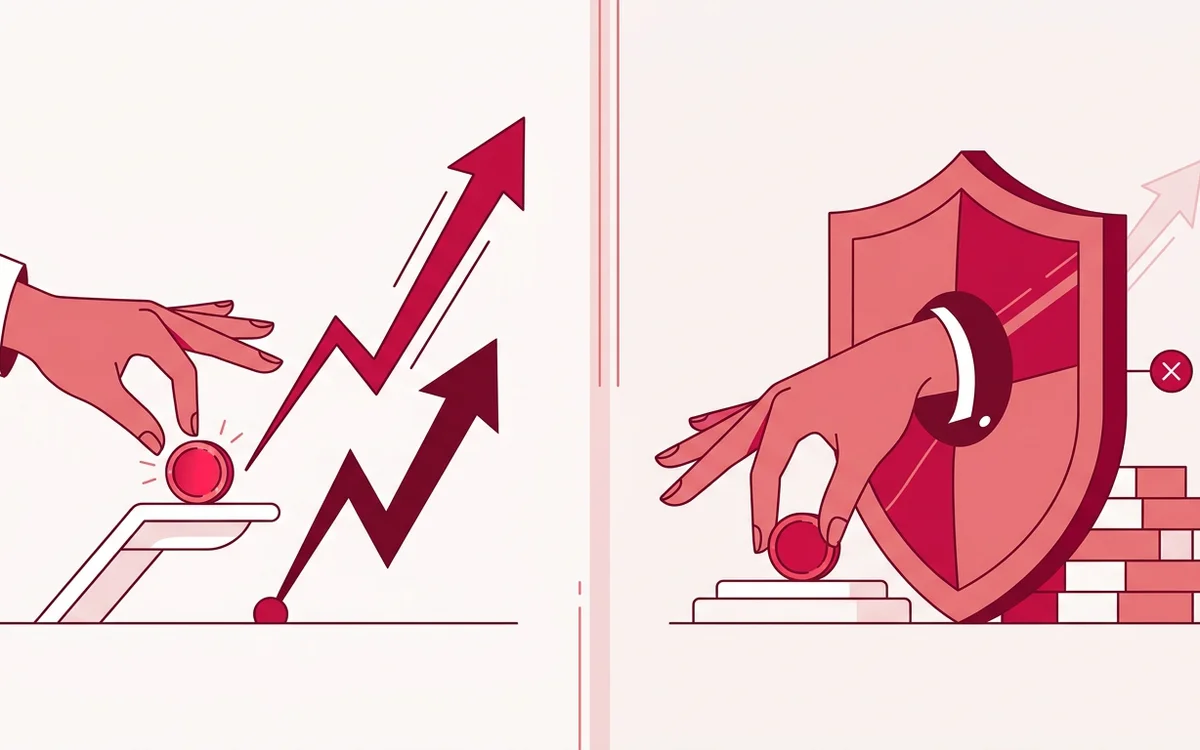
Options have two sides: the buyer and the seller. They can both be intelligent positions, but they are not the same risk. Many trading mistakes come from copying one side without understanding the payoff.

Option buying
An option buyer pays premium. The maximum loss is the premium paid. This sounds attractive, but the buyer needs the market to move enough before expiry.
For a call buyer, the desired move is upward. For a put buyer, the desired move is downward. If the move is too small, too slow, or in the wrong direction, the option can lose value.
Option buying is hurt by time decay. Every day that passes can reduce the option's value, especially near expiry.
Option selling
An option seller receives premium. The seller profits if the option expires worthless or loses value. This can create frequent small gains in calm markets.
The problem is loss size. A naked option seller's maximum profit is capped at the premium received, but loss can be much larger when the underlying moves sharply. Margin is required, and margin can increase during volatile periods.
Probability is not enough
Option selling often has a higher probability of small profit. Option buying often has a lower probability but a larger payoff when the move is big enough.
The right comparison is not just "how often can I win?" It is:
- How much can I lose when I am wrong?
- Can I survive a gap move?
- Is my position hedged?
- Is liquidity good enough to exit?
- Do I understand margin requirements?
A strategy with many small wins and one huge loss is not safe just because the win rate looks high.
A win-rate example
Imagine two strategies:
| Strategy | Win rate | Average win | Average loss | Result over 100 trades |
|---|---|---|---|---|
| A | 70% | ₹1,000 | ₹4,000 | Loss overall |
| B | 35% | ₹5,000 | ₹1,500 | Profit overall |
Strategy A feels better because it wins more often. But 30 losses of ₹4,000 can wipe out 70 wins of ₹1,000. Strategy B loses more often, but the win/loss size is better.
This is why risk-reward matters more than comfort.
Time decay and volatility
Time decay usually helps sellers and hurts buyers. But volatility can change the picture. If implied volatility rises, option premiums can increase. If implied volatility falls, buyers can lose even if direction is partly right.
This is why options are not only a direction trade. They are also a time and volatility trade.
When buying may make sense
Option buying may suit situations where you expect a sharp move and want defined loss. The buyer knows the maximum loss at entry: the premium paid. But the buyer must be disciplined because many options expire worthless.
Useful questions for buyers:
- What move do I need by expiry?
- Is the premium reasonable?
- Is liquidity good enough?
- What is my exit plan if the move does not happen?
When selling may make sense
Option selling may suit experienced traders who understand margin, hedging, and tail risk. Sellers benefit from time decay, but they must control rare large losses.
Useful questions for sellers:
- Is the position hedged?
- What happens in a gap move?
- How much margin buffer do I have?
- What is the maximum loss if I am wrong?
If you cannot answer the maximum-loss question clearly, the position is too complex.
A simple way to compare both sides
Before choosing buying or selling, compare:
| Question | Buyer | Seller |
|---|---|---|
| Maximum loss known upfront? | Usually yes | Not always |
| Needs a fast move? | Usually yes | Usually no |
| Benefits from time decay? | No | Usually yes |
| Needs margin? | Premium paid | Often yes |
| Tail risk | Premium loss | Can be large |
The buyer is often fighting probability and time. The seller is often fighting rare but severe moves. Neither side is easy. The better choice is the one where you understand the risk completely.
Common mistakes to avoid
- Buying options without a target move and time frame. Hope is not a strategy.
- Selling naked options for "monthly income." Premium is earned by taking risk.
- Ignoring position size. A few lots can represent a large exposure.
- Judging strategies only by win rate. Loss size matters more than ego-friendly accuracy.
Bottom line
Option buyers pay premium for limited-loss exposure but fight time decay. Option sellers collect premium and may win often, but carry larger tail risk. Both sides require discipline, sizing, and a clear understanding of the payoff.
Frequently asked questions
Is option buying safer than option selling?
Option buying has limited loss equal to premium paid, but it can lose frequently due to time decay. Option selling may win often but can suffer large losses.
Why do many option buyers lose money?
They need the underlying to move enough, quickly enough, to overcome premium and time decay.
Why is option selling risky?
The seller's profit is capped at premium received, while losses can become large during sharp moves.
What is time decay?
Time decay is the tendency for an option's time value to reduce as expiry approaches, all else equal. It usually hurts buyers and helps sellers.
Is a high win rate enough in options?
No. A strategy can win often and still lose money if occasional losses are much larger than regular gains.
Sources & further reading
Was this article helpful?