What Is Inflation? Meaning, Causes, and Impact on Your Money
Inflation is the rise in prices over time. Learn how it affects purchasing power, savings, loans, salaries, and investment returns in India.

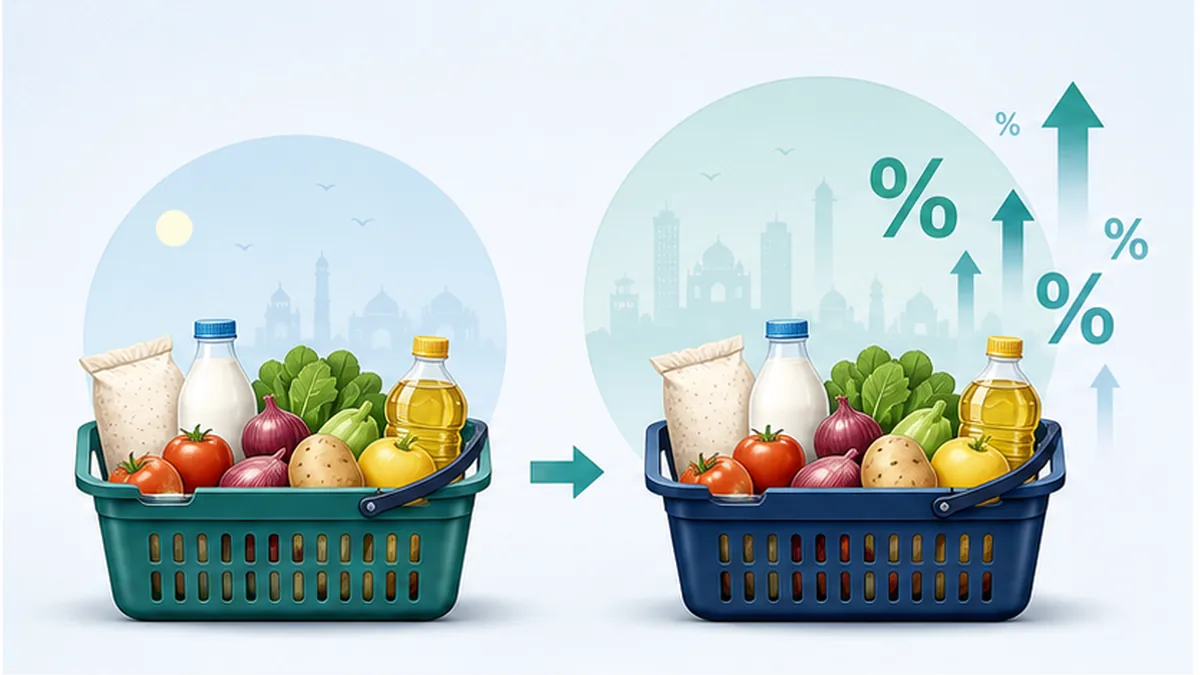
Inflation is one of the most important ideas in personal finance because it quietly changes what your money is worth. If a basket of groceries costs ₹1,000 today and the same basket costs ₹1,060 next year, prices have risen by 6%. Your money did not disappear, but its purchasing power fell.
Why inflation matters
Inflation affects almost every financial decision. It changes how much your salary can buy, how expensive loans feel, how much retirement money you need, and whether an investment return is actually useful after adjusting for rising prices.
For example, earning 7% on an investment sounds good. But if inflation is 6%, your real improvement in purchasing power is only about 1%. That is why investors should not look at returns in isolation.
Common causes of inflation
Inflation can come from several directions:
- Demand-pull inflation: People and businesses want to buy more than the economy can supply, so prices rise.
- Cost-push inflation: Input costs such as fuel, wages, transport, or imported materials rise, and businesses pass those costs to customers.
- Food and fuel shocks: In India, food and fuel prices can move sharply because of weather, global oil prices, and supply disruptions.
- Currency movements: If the rupee weakens, imported goods can become more expensive.
- Money and credit conditions: When credit is easy and spending rises quickly, inflation pressure can build.
Inflation and the RBI
The Reserve Bank of India watches inflation closely while deciding monetary policy. When inflation is too high, the RBI may raise interest rates to slow borrowing and spending. When growth is weak and inflation is under control, it may reduce rates to support demand.
Higher interest rates can affect loan EMIs, fixed deposit rates, bond prices, business profits, and stock market valuations. That is why inflation is not only an economics headline. It flows into household budgets and portfolios.
Inflation and your investments
Inflation is especially important for long-term goals. A retirement expense of ₹50,000 per month today will not remain ₹50,000 forever. At 6% inflation, the same lifestyle could cost around ₹90,000 per month after 10 years and more than ₹1.6 lakh after 20 years.
This is why long-term investors often need growth assets such as equity mutual funds as part of a diversified plan. Fixed-income products may provide stability, but if their return is close to or below inflation, they may not build enough real wealth.
A simple inflation example
Imagine your monthly household spending is ₹60,000. If your personal inflation is 6%, the same lifestyle may cost about ₹63,600 after one year. That does not sound dramatic. But inflation compounds.
At 6% inflation, ₹60,000 of monthly spending becomes roughly:
| Time | Estimated monthly cost |
|---|---|
| Today | ₹60,000 |
| 5 years | ₹80,000 |
| 10 years | ₹1,07,000 |
| 20 years | ₹1,92,000 |
This is why inflation is easy to underestimate. It feels small year by year, but over long periods it changes the size of every goal.
Headline inflation vs your inflation
The inflation number in the news is an average. Your own inflation may be very different.
If you are a renter in a fast-growing city, rent may dominate your budget. If you have young children, education costs may rise faster than general inflation. If you support elderly parents, healthcare inflation may matter more. A retiree who owns a house and spends mostly on food, utilities, and medical care experiences inflation differently from a young professional paying rent and commuting daily.
Once a year, compare your actual spending category by category. The question is not only "what is CPI inflation?" but "which parts of my own budget are rising fastest?"
How inflation affects different people
Inflation is not evenly painful. It often hurts people with fixed incomes most because their income does not adjust quickly. Salaried employees may receive increments, but if salary growth is below inflation, purchasing power still falls. Borrowers with fixed-rate loans may benefit if inflation rises while their EMI stays the same, but floating-rate borrowers may see higher interest rates.
For investors, inflation changes the benchmark. A safe return that looked attractive in a low-inflation period may become weak when inflation rises. This is why comparing real and nominal returns is essential.
What you can do in practical terms
Inflation cannot be controlled by an individual, but it can be planned for:
- Build an emergency fund for short-term shocks.
- Avoid keeping long-term money entirely in low-return savings products.
- Estimate future goals using inflation-adjusted numbers.
- Review insurance cover because replacement costs rise over time.
- Prefer investments based on after-tax, after-cost returns rather than headline returns.
Common mistakes to avoid
- Ignoring inflation in goal planning. A future education or retirement goal should be estimated in future rupees, not today's rupees.
- Comparing only nominal returns. A 7% return in a 6% inflation period is very different from a 7% return in a 3% inflation period.
- Assuming inflation is the same for everyone. Your personal inflation may be higher if your spending is concentrated in rent, healthcare, education, or travel.
Bottom line
Inflation is the slow reduction of purchasing power. It matters because wealth is not just about having more rupees; it is about what those rupees can buy. Good financial planning compares income, savings, and investment returns against inflation, not just against last year's numbers.
Frequently asked questions
Is inflation always bad?
Not always. Moderate inflation can exist in a growing economy. The problem is inflation that is too high, too unpredictable, or much higher than income growth.
How does inflation affect savings?
Inflation reduces purchasing power. If your bank account earns 3% but prices rise 6%, your money grows in rupees but loses value in real terms.
Who measures inflation in India?
India commonly reports CPI through the Ministry of Statistics and Programme Implementation, while the RBI uses inflation data when setting monetary policy.
What is personal inflation?
Personal inflation is the price rise you experience based on your own spending pattern. It may be higher or lower than the national CPI depending on how much you spend on rent, food, education, fuel, healthcare, and travel.
How can I protect my money from inflation?
Keep short-term money liquid and safe, but give long-term goals exposure to assets that have a reasonable chance of beating inflation after costs and taxes. The right mix depends on your goal, time horizon, and risk capacity.
Sources & further reading
Was this article helpful?