Real vs Nominal Returns: The Inflation Adjustment Investors Forget
A return can look attractive before inflation and weak after it. Learn the difference between nominal and real returns with simple examples.
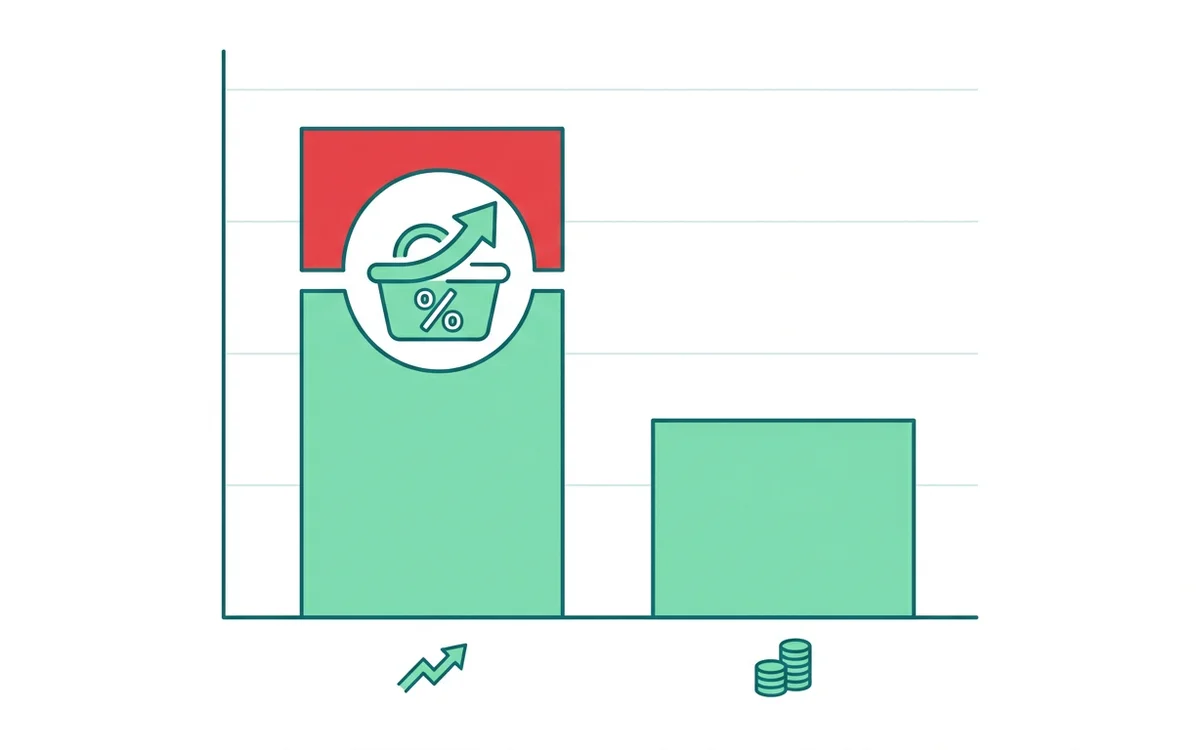
Investors often celebrate a return number without asking one crucial question: after inflation, am I actually richer? The answer depends on the difference between nominal and real returns.

A simple example
Suppose you invest ₹1,00,000 and it becomes ₹1,08,000 after one year. Your nominal return is 8%.
Now suppose inflation during that year was 6%. Prices rose, so ₹1,08,000 does not buy 8% more goods and services. A rough estimate of your real return is:
Nominal return - inflation = real return
8% - 6% = 2% real return
The exact formula is slightly different, but the idea is clear: inflation reduces the value of your return.
The exact formula
For a more accurate calculation:
Real return = ((1 + nominal return) / (1 + inflation)) - 1
Using the same example:
((1.08 / 1.06) - 1) = 1.89%
The shortcut gave 2%. The exact result is 1.89%. For quick thinking, the shortcut is fine. For detailed planning, the exact formula is better.
A goal-planning example
Suppose you want ₹20 lakh in today's value for a child's higher education goal 10 years from now. If education inflation is 8%, the future cost is not ₹20 lakh. It is roughly:
₹20,00,000 x (1.08 ^ 10) = about ₹43 lakh
Now suppose your investment earns 11% before inflation. The real return against 8% education inflation is only about 2.8%. That real return is what actually closes the gap between today's cost and future cost.
For long-term goals, estimate the future cost first. Then choose an investment plan. Starting with the investment return and ignoring inflation is backwards.
Why real return matters
Financial goals are about future purchasing power. You do not retire on a percentage return; you retire on the ability to pay for food, housing, healthcare, travel, and family needs.
If a long-term investment earns 7% while inflation averages 6%, the real return is modest. If another investment earns 11% while inflation is 5%, the real return is much stronger. This difference compounds over many years.
Real returns and asset choices
Different assets have different real-return potential:
- Savings accounts and short-term deposits may provide liquidity, but their real return can be low after tax and inflation.
- Debt funds and bonds may provide steadiness, but high inflation can reduce real returns.
- Equity and equity mutual funds have higher risk, but over long horizons they may offer better inflation-beating potential.
- Gold and real estate can sometimes protect against inflation, but their returns are uneven and depend on price cycles.
No asset guarantees a positive real return every year. The point is to build a plan that gives each goal the right mix of safety, liquidity, and growth.
Taxes matter too
Inflation is not the only adjustment. Taxes can reduce your return before you even compare it with inflation. A fixed deposit return may look reasonable before tax, but after tax and inflation the real return may be much lower.
For long-term planning, a useful question is: what is my expected return after costs, taxes, and inflation?
Real return by goal type
Not every goal needs the same real return. Money needed in the next 1-3 years should prioritize safety and liquidity, even if real return is low. Money needed after 10-20 years usually needs some growth exposure, because inflation has more time to compound.
| Goal type | Main risk | Return focus |
|---|---|---|
| Emergency fund | Loss of access | Liquidity and safety |
| 1-3 year goal | Market volatility | Capital protection |
| 5-10 year goal | Inflation and volatility | Balanced real return |
| Retirement | Long-term inflation | Durable inflation-beating growth |
This is why the same product can be sensible for one goal and unsuitable for another.
How to use this in real life
When reviewing an investment, write three numbers side by side:
- Expected nominal return.
- Expected tax and cost drag.
- Expected inflation for that goal.
For example, if a product may earn 7%, taxes and costs may reduce it to 5.5%, and your goal inflation is 6%, the real return is likely negative. That does not automatically make the product useless. It may still be appropriate for short-term safety. But it should not be treated as a growth engine for a long-term goal.
This is also why comparing a fixed deposit, debt fund, index fund, and equity fund using only one-year return is not enough. Each has a different role in a plan.
Common mistakes to avoid
- Comparing returns without inflation. A 9% return in a high-inflation year is not the same as 9% in a low-inflation year.
- Ignoring taxes. Tax can turn a small real return into almost nothing.
- Keeping long-term money too conservative. Safety matters, but over decades inflation can be the bigger risk.
Bottom line
Nominal return tells you how many more rupees you have. Real return tells you whether those rupees buy more. For serious financial planning, real return is the number that matters.
Frequently asked questions
What is nominal return?
Nominal return is the return shown before inflation. If an investment grows from ₹1,00,000 to ₹1,08,000, the nominal return is 8%.
What is real return?
Real return is the return after adjusting for inflation. It estimates how much your purchasing power actually improved.
Can real return be negative?
Yes. If your investment earns 5% and inflation is 7%, your nominal value rises but your purchasing power falls.
What is the exact real return formula?
A more accurate formula is: (1 + nominal return) divided by (1 + inflation rate), minus 1. The simple shortcut of nominal return minus inflation is close enough for rough estimates.
Should I use expected inflation or past inflation?
For planning future goals, use a reasonable expected inflation rate. Past inflation is useful context, but future education, healthcare, rent, or lifestyle costs may rise differently.
Sources & further reading
Was this article helpful?