The Power of Compounding: Start Early, Retire Richer
Why a decade of head start can do more for your retirement corpus than years of higher contributions later, explained with real numbers.
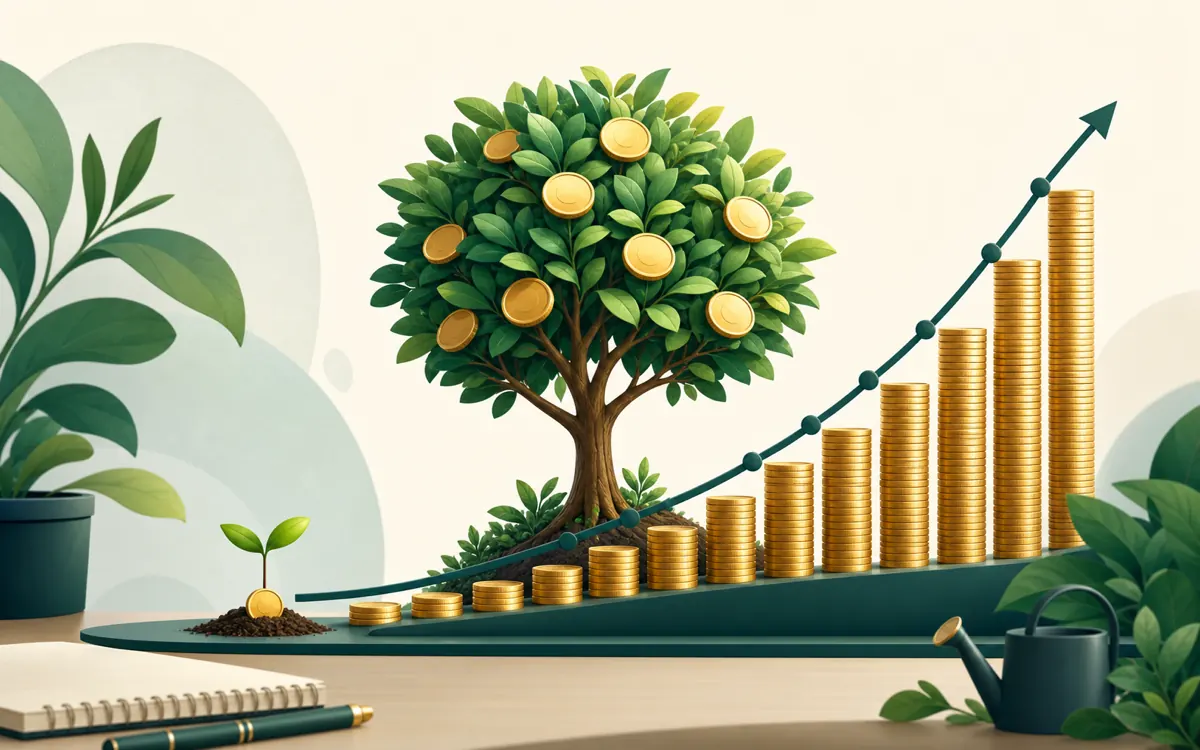
Most people understand that money invested grows over time. What surprises them is how it grows — not in a straight line, but on a curve that bends sharply upward the longer you leave it alone. That curve is the result of compounding, and understanding it is one of the most useful things a new investor can do.
What compounding actually means
Compounding is what happens when the returns you earn begin to earn returns of their own. In year one you earn a return on your original investment. In year two you earn a return on the original plus the first year's gains. Repeat this for a few decades and the "returns on returns" eventually dwarf the money you originally put in.
This is different from simple interest, where you only ever earn a return on the original amount. The gap between the two looks small at first and enormous later.
The formula behind it
The future value of a lump sum under compounding is:
FV = P × (1 + r) ^ n
Where P is the amount invested, r is the rate of return per period, and n is the number of periods. The exponent on n is the whole story: because time sits in the power, not the base, each additional year does more work than the one before it.
For recurring investments like a monthly SIP, the maths is a little busier, but the principle is identical — every instalment you add compounds for however many years remain until you withdraw.
Why starting early matters more than starting big
Consider two investors, both aiming to invest until age 60 at an assumed 12% annual return.
| Investor | Starts at | Invests | Stops at | Approx. corpus at 60 |
|---|---|---|---|---|
| Aarav | 25 | ₹5,000/month | 35 (10 years only) | larger |
| Bhavna | 35 | ₹5,000/month | 60 (25 years) | smaller |
Aarav invests for only ten years and then stops adding money entirely. Bhavna invests for twenty-five years straight. Yet because Aarav's contributions had an extra decade to compound, he often finishes ahead — despite putting in far less total money. The head start, not the effort, did the heavy lifting.
This is why the single most valuable variable a young investor controls is when they begin, not how much they can spare.
A worked example
Invest ₹1,00,000 once and leave it untouched at 12% a year:
- After 10 years: roughly ₹3.1 lakh
- After 20 years: roughly ₹9.6 lakh
- After 30 years: roughly ₹30 lakh
Notice the pattern. The money roughly triples in the first decade, but the rupee gain in the third decade is far larger than in the first — even though the rate never changed. That widening is compounding becoming visible.
It works against you, too
The same engine that builds wealth also builds debt. An unpaid credit-card balance in India can carry an interest rate of 36–48% a year, compounded monthly. Left unpaid, it snowballs in exactly the way a good investment does — just in the wrong direction. Clearing high-interest debt is, in effect, one of the most reliable "returns" available.
Common mistakes to avoid
- Waiting for the "right time" to start. Delay is the costliest mistake — the early years are the ones with the most time to compound.
- Interrupting or withdrawing early. Breaking the compounding chain resets much of the benefit.
- Underestimating debt compounding. High-interest debt works against you just as powerfully.
- Expecting a guaranteed return. Compounding magnifies whatever return you actually earn, which varies year to year.
Bottom line
Compounding rewards patience and punishes delay. You don't need a large income or perfect market timing to benefit from it — you need time and consistency. The most expensive years are the ones you spend waiting to start.
Want to see how your own numbers play out? Try the compound interest calculator in the sidebar.
Frequently asked questions
What is compound interest in simple terms?
It is interest earned not only on your original amount but also on the interest already added. Each period's returns are added to your balance and then earn returns of their own, so growth accelerates over time.
Why does starting early matter so much?
Because the largest gains come in the final years, when the balance is biggest. A decade of head start can do more for your corpus than years of larger contributions added later.
Does compounding work against me on debt?
Yes. The same force that builds wealth also builds debt. An unpaid credit-card balance can compound rapidly in the wrong direction, which is why clearing high-interest debt is so valuable.
What return should I assume when projecting compounding?
Any rate you use is an assumption, not a guarantee. Real returns vary and can be negative in some years. Use a calculator to explore scenarios rather than treating a single figure as certain.
Sources & further reading
Was this article helpful?