CPI vs WPI Inflation in India: What Is the Difference?
CPI and WPI both measure price changes, but they track different baskets. Learn which one matters more for households and monetary policy.
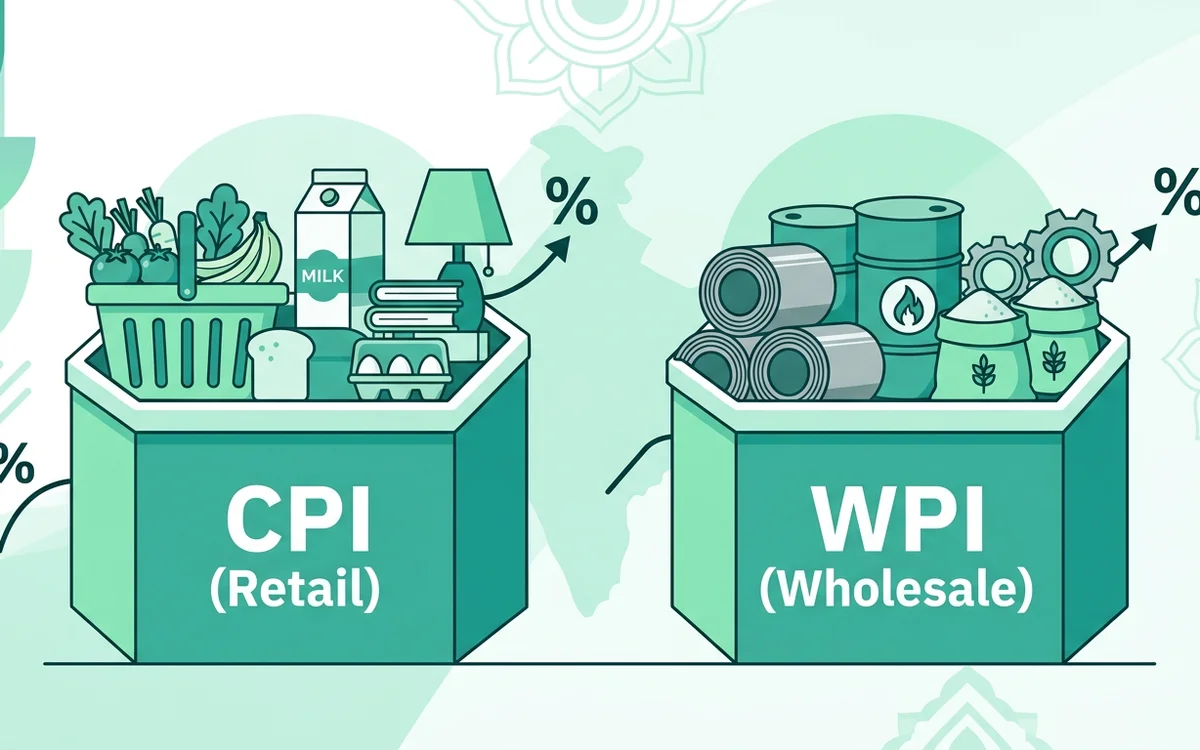
Inflation is often reported as one number, but India has more than one inflation measure. Two common terms are CPI and WPI. They sound similar, but they answer different questions.
CPI: prices households feel
CPI is closer to everyday life because it measures prices at the consumer level. It includes categories such as food, housing, clothing, transport, fuel, healthcare, education, and other services.
If your grocery bill, rent, cab fares, school fees, and medical expenses rise, CPI is the inflation measure most likely to reflect that pressure.
WPI: prices earlier in the supply chain
WPI tracks wholesale prices, which are closer to producers, manufacturers, and distributors. It is useful for understanding price pressure in goods markets and supply chains.
For example, if metal, chemicals, fuel, or manufactured goods become more expensive at the wholesale level, WPI may reflect that before the full effect reaches consumers. But WPI does not capture consumer services in the same way CPI does.
Why CPI matters for RBI policy
The Reserve Bank of India focuses on CPI inflation for its monetary policy framework. That makes CPI important for borrowers, savers, bond investors, and equity investors.
When CPI inflation is high, the RBI may keep interest rates higher to cool demand and control price pressure. When inflation is comfortable, it has more room to support growth. Those decisions can influence loan rates, deposit rates, bond yields, and market sentiment.
Why CPI and WPI can differ
CPI and WPI may not move together for several reasons:
- They measure different baskets.
- CPI includes services more directly.
- Wholesale price changes may not be passed fully to retail customers.
- Taxes, margins, transport, and distribution costs can change the final retail price.
- Food and fuel weights can affect each index differently.
This is why a news report can say WPI inflation is low while households still feel higher prices in groceries, rent, or services.
A practical example
Suppose crude oil prices rise. The first impact may show up in wholesale fuel and input prices. Transport costs then rise for businesses. Some businesses absorb the cost because demand is weak. Others pass it on through higher retail prices. By the time consumers feel the full effect, the CPI impact may be delayed, smaller, or spread across many categories.
The reverse can also happen. Wholesale prices may cool, but retail prices remain sticky because rents, wages, taxes, logistics, or margins do not fall immediately.
This is why WPI can be useful for spotting pipeline pressure, while CPI is better for judging the household impact.
How to read inflation headlines
When you see an inflation headline, ask four questions:
- Is the report talking about CPI or WPI?
- Is the rise broad-based, or mostly food/fuel?
- Is it one month of volatility, or a multi-month trend?
- What does it imply for RBI interest-rate decisions?
For example, a temporary vegetable price spike may hurt households but may not change long-term monetary policy if it reverses quickly. But persistent core inflation across services and manufactured goods is more concerning.
Why investors should care
Inflation data affects more than household budgets. It influences bond yields, loan rates, deposit rates, and equity valuations.
If CPI stays high, markets may expect the RBI to keep rates higher for longer. Higher rates can pressure long-duration bonds and rate-sensitive sectors. If inflation cools steadily, bond yields may soften and borrowing conditions may improve. None of this is automatic, but inflation is one of the main inputs markets watch.
For long-term investors, the main lesson is simpler: your investment return must beat inflation after costs and taxes to create real wealth.
CPI components worth watching
You do not need to track every inflation table line by line. But some components are worth understanding:
- Food inflation can be volatile because weather and supply chains matter.
- Fuel inflation affects direct fuel spending and transport costs.
- Housing and rent matter more for urban households.
- Education and healthcare can rise faster than broad CPI for many families.
- Services inflation can be sticky because wages and rents do not fall quickly.
This matters for goal planning. A retirement plan may use one inflation assumption, but education and healthcare goals may need higher assumptions. A single national CPI number is useful, but your plan should reflect the kind of expenses you are actually saving for.
Common mistakes to avoid
- Treating CPI and WPI as interchangeable. They measure different parts of the price chain.
- Using headline inflation as your personal inflation. Your own spending basket may differ from the national basket.
- Ignoring inflation in returns. Whether CPI is high or low, your real return depends on what is left after inflation.
Bottom line
CPI tells you more about the prices households pay. WPI tells you more about wholesale price pressure in goods. For personal finance and RBI policy, CPI is usually the more important number to understand.
Frequently asked questions
Which is more important for ordinary households, CPI or WPI?
CPI is usually more relevant because it measures retail prices consumers actually pay.
Can CPI and WPI move differently?
Yes. Wholesale prices can rise or fall before those changes fully reach retail prices, and the two indices use different baskets and weights.
Does the RBI use CPI or WPI?
The RBI's inflation targeting framework is based on CPI inflation.
Why can my grocery bill rise faster than CPI?
CPI is an average basket. If the items you buy most often, such as vegetables, milk, rent, school fees, or fuel, rise faster than the national basket, your personal inflation can feel higher.
Should investors track CPI every month?
Monthly CPI is useful context, but investors should avoid overreacting to one data point. Trend, food and fuel pressure, RBI commentary, and interest-rate expectations matter together.
Sources & further reading
Was this article helpful?