Interest Rates, Inflation, and How They Affect Bonds
Why do bond prices fall when interest rates rise? How does inflation eat into your returns? A clear explanation of the forces that move fixed income.
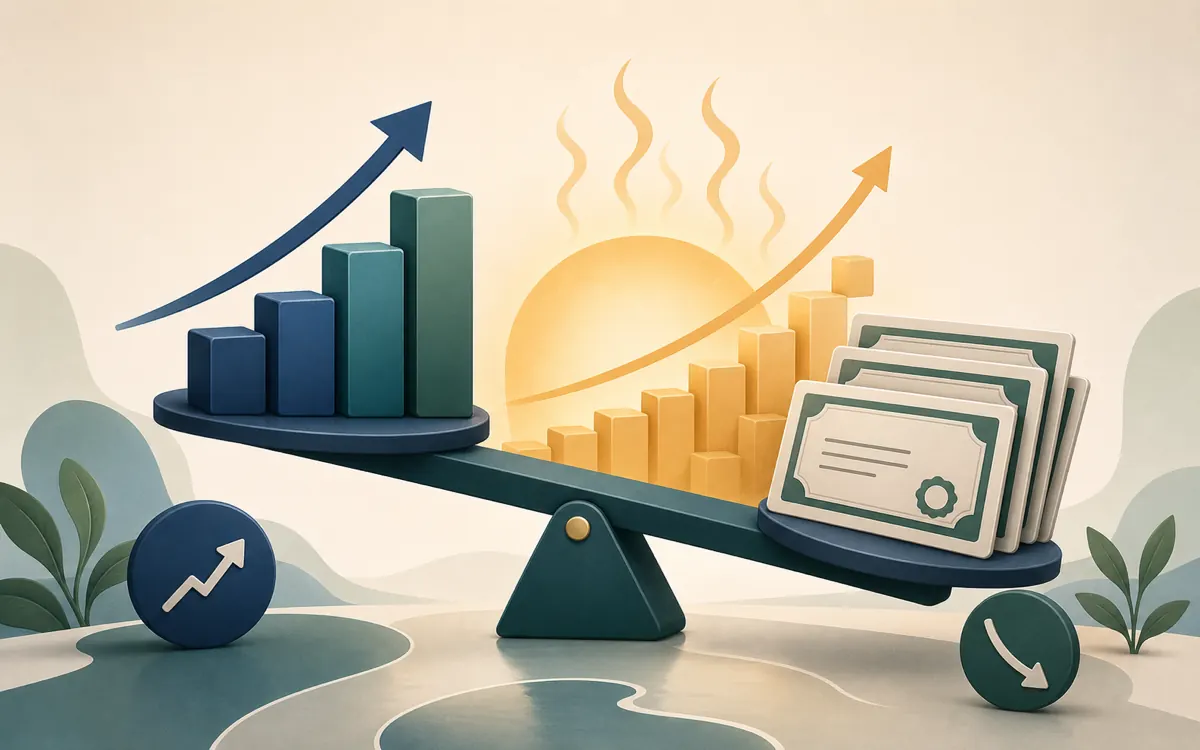
If you have read what is a bond?, you know a bond pays a fixed coupon and returns your money at maturity. The puzzle that trips most people up is this: if the payments are fixed, why does a bond's price keep moving? The answer lies in interest rates and inflation — and once it clicks, fixed income makes far more sense.
The core idea: price and yield move in opposite directions
Start with the single most important rule in bonds:
When market interest rates rise, the prices of existing bonds fall. When rates fall, existing bond prices rise. This inverse relationship is the heartbeat of the bond market, and it follows directly from common sense once you see why.
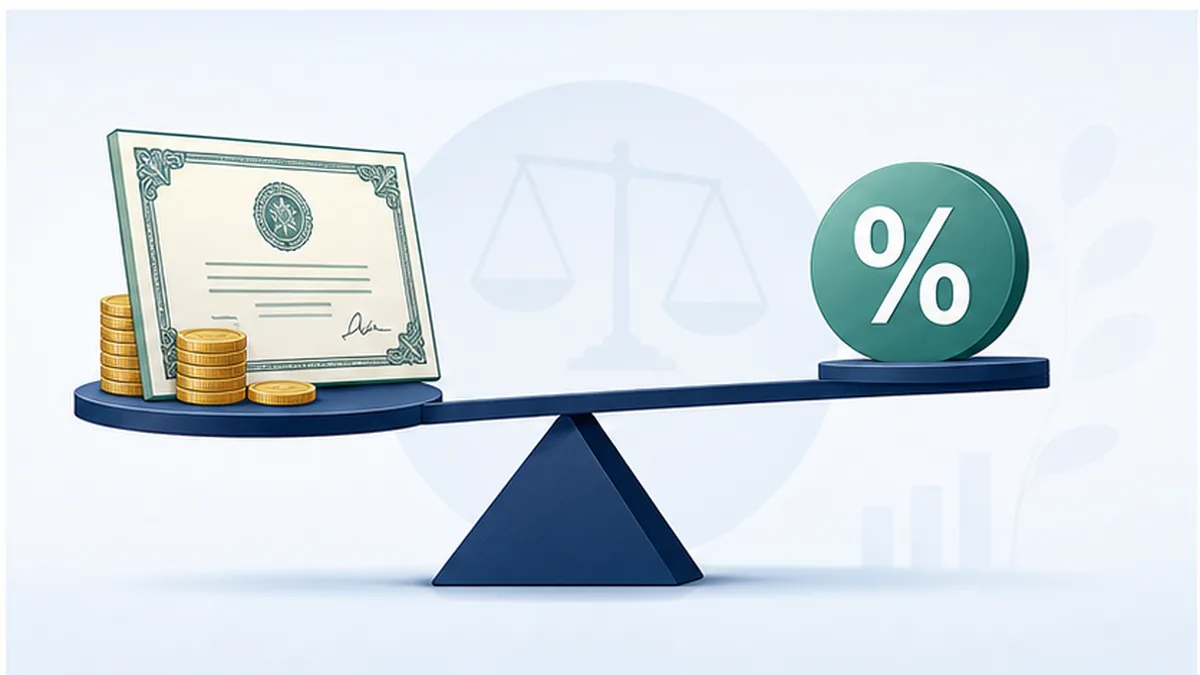
Why rising rates push bond prices down
Imagine you own a bond paying an 8% coupon. Then interest rates in the economy rise, and brand-new bonds start being issued at 9%. Why would anyone buy your 8% bond when they can get 9% on a new one?
They wouldn't — not at the old price. To sell your bond, you would have to lower its price until its effective return (its yield) matches the 9% available elsewhere. So your bond's price drops. Nothing about your bond changed — its coupon is still 8% — but its market value fell because better alternatives appeared.
The reverse happens when rates fall: your 8% bond suddenly looks generous next to new 7% bonds, so its price rises.
A worked example
Suppose you hold a bond with a face value of ₹1,000 paying ₹80 a year (8%). Market rates rise so that buyers now demand a 10% yield.
- To give a 10% yield, ₹80 a year must represent 10% of the price.
- Price ≈ ₹80 ÷ 0.10 = ₹800.
Your bond's price fell from ₹1,000 to roughly ₹800 — even though it still pays the same ₹80 — purely because rates rose. (This is simplified; real pricing accounts for time to maturity, but the direction is exactly this.)
Duration: how much prices move
Not all bonds react equally. The sensitivity is captured by duration.
Longer-term bonds generally have higher duration, so they swing more when rates change. This is why long-dated government bonds can be surprisingly volatile, while short-term bonds barely move.
Where inflation comes in
Inflation attacks bonds from a different angle.
A bond pays you fixed rupee amounts. If inflation rises, those fixed rupees buy less by the time you receive them — your real return shrinks even though the rupee figure is unchanged. This is why bonds, especially long-term ones, are vulnerable to inflation: it quietly eats their value.
There is also a second, indirect hit. When inflation rises, central banks usually respond by raising interest rates to cool the economy — and as we just saw, rising rates push bond prices down. So inflation hurts bonds twice: directly, by eroding real returns, and indirectly, by triggering rate rises.
The RBI's role
In India, the Reserve Bank of India (RBI) sets a benchmark policy rate (the repo rate) as its main tool for managing inflation.
When the RBI raises the repo rate to fight inflation, interest rates across the economy tend to rise, bond yields go up, and existing bond prices fall. When it cuts the rate, the reverse happens. This is why bond investors watch RBI policy meetings so closely — those decisions ripple straight into their holdings.
What this means for you as an investor
- If you hold a bond to maturity, day-to-day price swings don't affect you — you still get your coupons and face value.
- If you might sell early, or you invest through a debt mutual fund whose value reflects market prices, interest-rate moves matter a great deal.
- In a rising-rate environment, longer-duration bonds are the most exposed; shorter-duration bonds are steadier.
Common mistakes to avoid
- Thinking bonds are immune to loss. Rising rates can dent a bond's price meaningfully, especially long-duration ones.
- Ignoring inflation. A 7% bond return with 6% inflation is barely growing your purchasing power.
- Misjudging duration. Reaching for long-dated bonds for a slightly higher yield can mean far more volatility than expected.
Bottom line
Bond prices move because the world around them changes: when interest rates rise, existing bonds become less attractive and their prices fall, and inflation erodes the real value of their fixed payments. The RBI's rate decisions sit behind much of this. None of it makes bonds bad — it just means understanding rates and inflation is essential to using them well, rather than being caught off guard when a "safe" bond drops in value.
Frequently asked questions
Why do bond prices fall when interest rates rise?
Because new bonds get issued at the higher rate, making older bonds with lower fixed coupons less attractive. To sell an old, lower-coupon bond, its price has to drop until its yield matches what new bonds offer. So rising rates push existing bond prices down.
What is duration in bonds?
Duration measures how sensitive a bond's price is to interest-rate changes. A longer-duration bond falls (or rises) more when rates move. Roughly, a bond with a duration of 5 loses about 5% of its value if interest rates rise by one percentage point.
How does inflation affect bonds?
A bond pays fixed amounts, so if inflation rises, those fixed rupees buy less in real terms — your real return shrinks. High or rising inflation is therefore bad for most bonds, and it often leads the central bank to raise rates, which pushes bond prices down too.
What happens to bonds when the RBI changes the repo rate?
The repo rate influences interest rates across the economy. When the RBI raises it, bond yields generally rise and existing bond prices fall; when it cuts the rate, yields tend to fall and bond prices rise. Long-duration bonds react the most.
Sources & further reading
Was this article helpful?